Omnicomm fuel tanker monitoring shows how much fuel each tanker carries, where it dispenses it and whether every litre reached the receiving vehicle’s tank.
The tanker leaves "full" but arrives partly empty.
Litres dispensed ≠ litres received by the vehicle.
Fuel siphoned from the tanker between sites.
The tanker burns fuel too — and it must be counted.

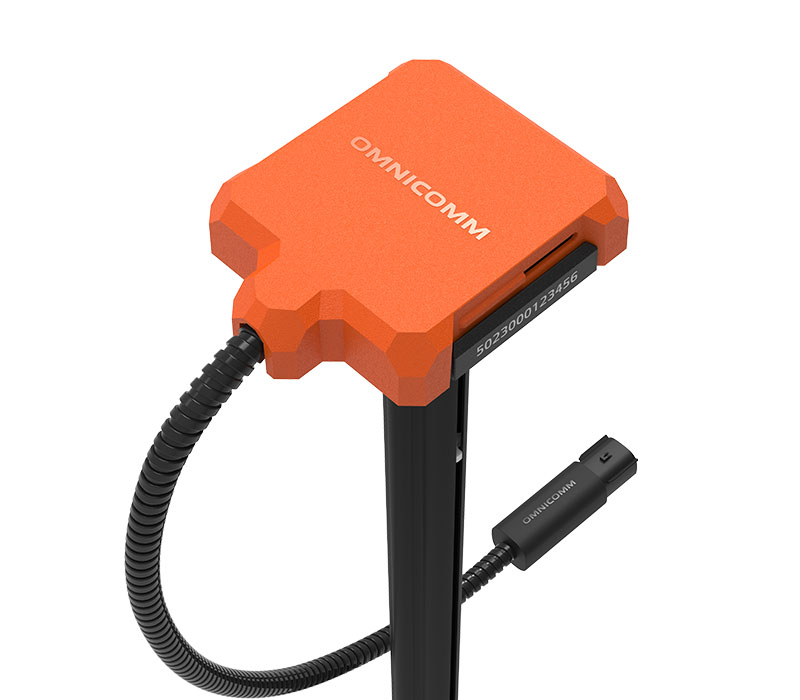
Explosion-proof LLS-Ex 5 tracks the fuel on board.
Measures every dispense transaction.

Records where and when each dispense happened.

Dispensed vs received litres, reconciled automatically.
| Paper log, manual counter | Omnicomm fuel tanker monitoring | |
|---|---|---|
| Fuel on board in real time | ✕ | ✓ |
| Every dispense with time and place | manual entry | ✓ |
| Dispensed vs received check | by hand, weeks later | automatic |
| Drains en route detected | ✕ | ✓ |
| Certified for explosive zones | — | ✓ LLS-Ex 5 + BIS-MX |
Tell us how many tankers and tanks you run — we will estimate the payback for free.
ATEX-certified for zones 0, 1 and 2, lengths up to 6 m.
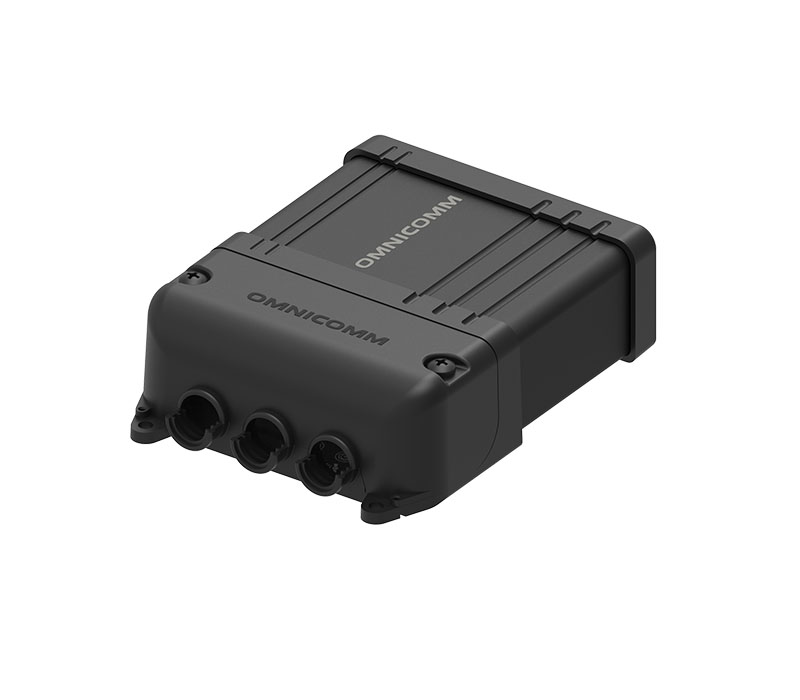
Mandatory barrier; connects two sensors to one tracker.
For tankers with more than two sensors.
Deliveries reconciled against the volume actually received.
Inventory in ATEX-rated underground tanks.
Telecom towers, data centres, factories: levels and theft alerts.
ICON display and LLD indicator for operators.
payback · NQC, Mexico (fleet incl. tank trucks)
saved per hour of downtime prevented · Silver Spark generators
less fuel, drains exposed · Belgrade, 500 vehicles
equipped after theft was curbed · Transportes Masa
Refuelling, drain and fuel theft control for the whole fleet.
Litres per 100 km or per engine hour vs norms.
Fuel control for ships and vessels.
A fuel tanker monitoring system controls fuel from the moment it is loaded into a tank truck until it reaches the tank of a machine on site. Omnicomm combines explosion-proof LLS-Ex 5 fuel level sensors in the tanker, flow meter data from the dispensing unit, GPS trackers and the Omnicomm Online platform, so every load, dispense and drain is recorded with time, place and volume.
Construction, mining and agricultural sites are often far from fuel stations, so fuel is delivered by mobile tankers and dispensed directly into vehicles and machinery. This creates several weak points: the volume loaded at the depot, the volume dispensed at the nozzle and the volume that actually reaches the receiving tank can all differ. Without fuel dispensing monitoring, these gaps hide ghost loads, short dispensing and drains on the way between sites.
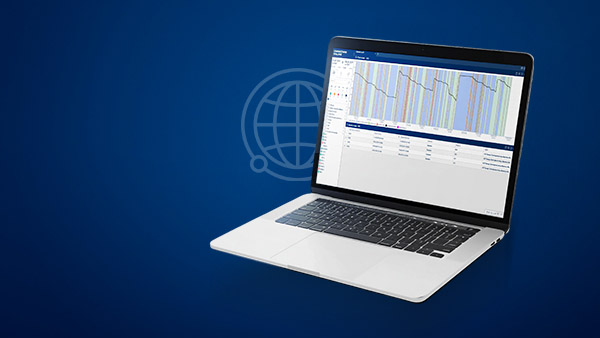
The level sensor in the tanker tracks the total fuel on board, while the flow meter measures each dispense transaction. The GPS tracker links every operation to a place and time. The Fuel Tanker Log report in Omnicomm Online automatically compares the dispensed volume with the fuel received in the vehicle tank, and the “Fuel Dispensing, Filling and Draining” report lists all operations performed by the tanker. The fuel used by the tanker itself is counted separately.
The inside of a fuel tank is an ATEX zone 0, so any sensor installed there must carry matching certification. LLS-Ex 5 is ATEX-certified for zones 0, 1 and 2 and is connected to the tracker only through the BIS-MX spark protection unit. For tankers with more than two sensors, the RKTZ-MX splitter keeps the installation explosion-safe.
The same equipment works for remote fuel tank monitoring at depots, tank farms, fuel stations and diesel generators. Sensors give real-time levels and theft alerts, deliveries are reconciled against the volume actually received, and ICON or LLD displays show the fuel volume to operators on site. Fuel tank data can be exported to ERP and accounting systems.
Where there is no cellular coverage, an Omnicomm PORT module installed on a fuel tanker can collect data from Profi Wi-Fi trackers on the machines it serves and send it to the server once the tanker is back in coverage.
Fuel level sensors and fuel flow meters are two different technologies, each with its own strengths. A level sensor sits inside the tank and measures how much diesel or other fuel is there, capturing every fill, drain, and consumption event including theft from the tank. A flow meter is installed in the fuel line and measures fuel passing to the engine, with very high short-term accuracy on each transaction but no visibility into what happens inside the tank.
The flow meter's strength is short-burst precision: it can measure a 50-liter transfer at a fuel pump to a tenth of a liter. The trade-offs are real. Flow meters do not detect events such as theft, drain, or refueling at unauthorized stations because they only see fuel that has already left the tank. Errors accumulate over time, since every transaction adds its own small measurement bias. And there is a physical risk: if a sand grain or debris particle reaches the meter, the moving element can jam and block fuel flow to the engine, which on a working vehicle is a serious failure mode. Level sensors avoid all three problems. They monitor the tank itself with no moving parts in the fuel line, accumulate no transaction error, and detect every event including in-tank theft. The strongest setup in some applications combines both: in mobile fuel dispensers, for example, a level sensor sits in the tanker to track the total fuel volume in storage, while a flow meter measures each dispense transaction at the nozzle. The two technologies cross-verify each other, with the level sensor providing the long-term baseline and the flow meter providing per-transaction precision. For fleet vehicle applications, where the priority is detecting theft and consumption anomalies from inside the tank, a level sensor is the right primary tool.
You need an explosion-proof sensor like LLS-Ex 5 if you are monitoring fuel tankers, oil depots, gas stations, chemical plants, mining operations, or any ATEX-zoned hazardous environment. LLS-Ex 5 is ATEX-certified, offers 5,000V galvanic isolation via the BIS-MX spark protection unit, and comes in lengths up to 6 meters, the longest in the OMNICOMM portfolio.
ATEX zone classification splits hazardous areas into three categories based on how often explosive atmospheres are present. Zone 0 is continuous (inside a fuel tank itself), Zone 1 is occasional (around tank vents, fuel transfer points), and Zone 2 is rare (general site areas where a leak might occur). Equipment installed in any of these zones must carry matching certification, and using a non-rated sensor is a safety and insurance violation, not just a regulatory one. LLS-Ex 5 is rated for Zones 0, 1, and 2, and must be connected through the BIS-MX spark protection unit, which provides the 5,000V galvanic isolation that limits energy in the sensor circuit to non-ignition levels. LLS-Ex 5 is available in 1500, 2000, 2500, 3000, 4000, 5000, and 6000 mm lengths for global markets, covering everything from medium tankers to large depot storage. The sensor itself carries a lifetime warranty, and the BIS-MX carries 3 years.
Yes. OMNICOMM equips far more than vehicles. Stationary applications include gas stations, fuel depots, generator tanks for telecom towers and data centers, pumping stations, boilers, and tank farms. ATEX-certified LLS-Ex 5 sensors paired with the BIS-MX spark protection unit cover hazardous zones up to 6 meters deep. ICON Display and LLD Indicator give on-site readouts for operators.
Telecom operators in emerging markets manage thousands of tower sites powered by diesel generators, and fuel theft from those generators is a major cost line; OMNICOMM sensors on the generator day-tank or main reservoir give the operator real-time levels and theft alerts. Data centers run backup diesel generators that must have guaranteed fuel availability; precision sensors prevent the silent drift toward empty that paper-based monitoring cannot catch. Gas stations and depots use LLS-Ex 5 sensors in the ATEX-rated underground tanks to track inventory, reconcile deliveries against actual received volume, and detect leaks. For agricultural and construction operations, the on-site fuel tanker that distributes fuel to equipment is itself monitored to ensure that what the depot reports dispensing matches what the receiving equipment reports getting. Silver Spark Apparel in India deployed OMNICOMM sensors on factory generators specifically to prevent production-line downtime, with avoided losses calculated at around $30,000 per hour of prevented downtime.
Tank calibration maps sensor readings to actual fuel volume in non-cylindrical tanks, where one centimeter of fuel level is not one liter of fuel. Without proper calibration even a perfectly accurate sensor reports wrong volumes. Manual calibration is the dominant labor cost in a deployment, typically running about 4 hours per tank against just 40 minutes for the sensor install itself. OMNICOMM CalibrateX eliminates the manual calibration step, cutting total installation time by roughly 70 percent.
Most fuel tanks on commercial vehicles are irregular shapes designed to fit chassis constraints: rectangular with cut corners, D-shaped, saddle-shaped over rear axles, or split twin tanks connected by a balance line. In an irregular tank, the relationship between fuel level (measured by the sensor) and fuel volume (what you actually care about) is non-linear. You need a calibration table mapping every sensor reading to its corresponding volume in liters. Manual calibration involves emptying the tank, then pumping in known increments of fuel (typically 20 or 50 liters at a time) while recording the sensor reading at each step. For a 600-liter tank, that runs around 4 hours including drain and refill, doubling for twin-tank trucks. Across a 100-vehicle fleet, manual calibration alone can consume around 50 installer-days. CalibrateX replaces the manual step with software-driven measurement and pattern recognition, cutting total installation labor by about 70 percent. For partners running large rollouts, this turns calibration from a bottleneck into a routine step, and it is the reason CalibrateX is positioned as a key tool for the installer network.
We use cookies for analytics and advertising. They are set only with your consent. Privacy policy