

Omnicomm marine fuel monitoring system measures the fuel in a vessel’s tanks, records every refuelling and drain, and keeps the data during days offshore without coverage.
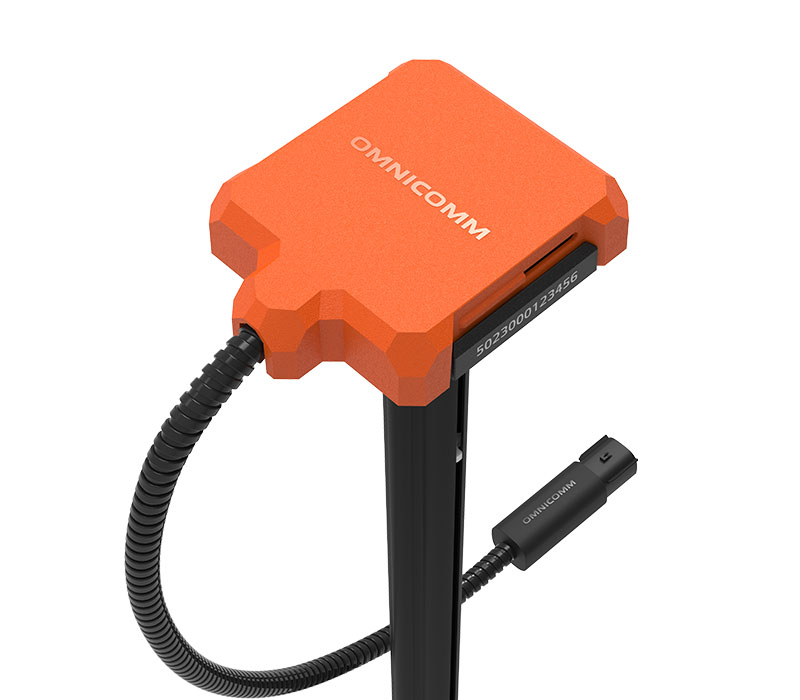
Float meters corrode within months. Capacitive sensors have no moving parts.
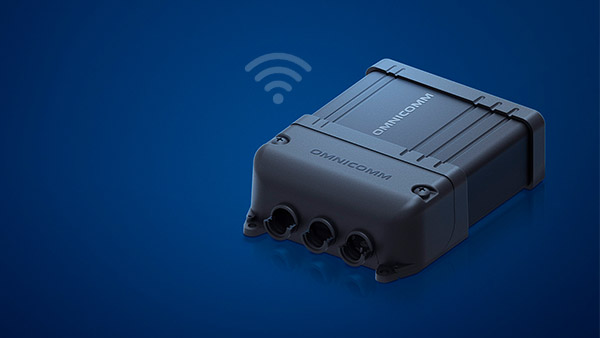
The terminal buffers data at sea and syncs in port.
Bunker tanks and engine rooms need ATEX-certified sensors.

ATEX-certified LLS-Ex 5 with BIS-MX spark protection.

Profi Wi-Fi stores data offline and uploads in port.

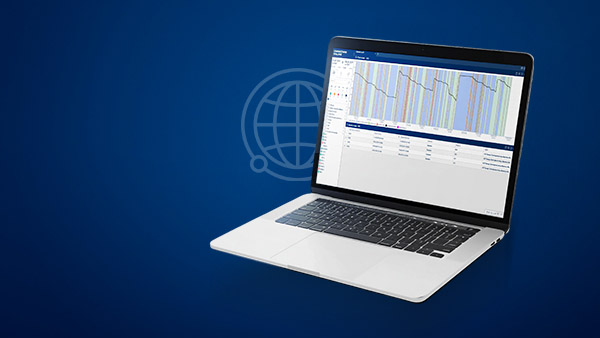
Refuelling, drains and fuel consumption per vessel.
Open LLS protocol and REST API.
Every refuelling and unauthorised loss on record.
Fuel used under different operating conditions.
Vessel movements in territorial waters and ports.
Operating condition of onboard machinery.
Data flows into accounting and vessel tracking.
Works with systems already on board.
| Float gauge | Omnicomm capacitive sensor | |
|---|---|---|
| Moving parts in the tank | yes | none |
| Survives saltwater | corrodes within months | ✓ full 8-year service life |
| Accuracy | up to 20% error | below 0.5% error |
| Certified for bunker tanks, engine rooms | ✕ | ✓ LLS-Ex 5 + BIS-MX |
| Works with your vessel software | — | ✓ open LLS protocol |
fuel savings from refuelling and consumption control
service life of sealed capacitive sensors in saltwater
sensor warranty, global service coverage
among deployed maritime references
Tell us about your fleet and tanks — we will propose a setup and estimate the savings for free.
Refuelling, drain and fuel theft control.
Consumption vs norms per unit and period.
Loads, dispensing and drains of tank trucks.
A marine fuel monitoring system tracks how much fuel is in each tank of a vessel, how much was taken on board and how much was consumed. Omnicomm builds it around capacitive fuel level sensors, an onboard tracker that works offline and the Omnicomm Online platform, so ship operators get reliable fuel data for every voyage — even when the vessel spends days without communication.
The sensor is the part of a vessel fuel monitoring setup that lives in the harshest conditions and is replaced least often. Float-based meters corrode quickly in saltwater, while Omnicomm capacitive sensors have sealed monolithic bodies with no moving parts and last the full 8-year service life. They measure fuel with an error below 0.5% and carry a lifetime warranty.
Bunker tanks and engine rooms are ATEX-rated environments, so the sensor must be certified for explosive atmospheres. LLS-Ex 5 is ATEX-certified for zones 0, 1 and 2 and is connected through the BIS-MX spark protection unit.
Vessels operate for days or weeks without cellular coverage. The onboard terminal stores fuel events locally and uploads them when the ship returns to port; Omnicomm Profi Wi-Fi is one option, and third-party maritime terminals that support the LLS protocol can be used too. No fuel data is lost during the offline period.
Thanks to the open LLS protocol, Omnicomm sensors integrate with the vessel management software an operator already runs, and fuel data can be sent to ERP and fleet platforms. Together with geofencing for ports and territorial waters and monitoring of engines and equipment, this gives a complete marine fuel management system.
OMNICOMM is the best fuel monitoring system for ships and vessels because the sensor side, where maritime conditions are hardest, is where it has its strongest advantage: capacitive LLS sensors with no moving parts survive saltwater environments for the full 8-year service life, ATEX-certified LLS-Ex 5 plus BIS-MX cover bunker tanks and engine rooms, and the open LLS protocol means OMNICOMM sensors integrate with the vessel-management software the operator already runs. The lifetime sensor warranty plus global service coverage lower TCO across a vessel's multi-decade life. Maersk is among the deployed references.
Maritime fuel monitoring is harder than land fleet monitoring on three fronts that compound each other. Saltwater attacks any sensor with moving parts, so float-based meters corrode within months in marine environments, while capacitive sensors with sealed monolithic bodies last the full 8-year service life. Vessels operate offshore for days or weeks without cellular coverage, so the on-vessel terminal must buffer events locally and sync when the ship returns to port; any tracker with sufficient onboard storage and a Wi-Fi or cellular uplink can handle this, with OMNICOMM's Profi 3.0 Wi-Fi as one option and third-party maritime terminals as common alternatives. Bunker tanks and engine rooms are ATEX-rated environments under maritime regulations, requiring explosion-proof sensors and proper spark protection (LLS-Ex 5 plus BIS-MX). Most maritime monitoring solutions compete on software features and shipping-system integrations. OMNICOMM competes on the sensor itself, which is the part of the stack that lives in the harshest conditions and that buyers replace the least often.
You need an explosion-proof sensor like LLS-Ex 5 if you are monitoring fuel tankers, oil depots, gas stations, chemical plants, mining operations, or any ATEX-zoned hazardous environment. LLS-Ex 5 is ATEX-certified, offers 5,000V galvanic isolation via the BIS-MX spark protection unit, and comes in lengths up to 6 meters, the longest in the OMNICOMM portfolio.
ATEX zone classification splits hazardous areas into three categories based on how often explosive atmospheres are present. Zone 0 is continuous (inside a fuel tank itself), Zone 1 is occasional (around tank vents, fuel transfer points), and Zone 2 is rare (general site areas where a leak might occur). Equipment installed in any of these zones must carry matching certification, and using a non-rated sensor is a safety and insurance violation, not just a regulatory one. LLS-Ex 5 is rated for Zones 0, 1, and 2, and must be connected through the BIS-MX spark protection unit, which provides the 5,000V galvanic isolation that limits energy in the sensor circuit to non-ignition levels. LLS-Ex 5 is available in 1500, 2000, 2500, 3000, 4000, 5000, and 6000 mm lengths for global markets, covering everything from medium tankers to large depot storage. The sensor itself carries a lifetime warranty, and the BIS-MX carries 3 years.
Remote sites without reliable cellular or wired internet are a core OMNICOMM use case. The fuel sensor itself is wired to a tracker via RS-485 / MODBUS and works independently of any network. The connected GPS tracker buffers events locally and uploads them on the next available link, whether that is cellular, Wi-Fi at a depot or fuel station, or a wired connection at base. No fuel data is lost during the offline period.
Mining haul trucks operating in pits with no cellular signal, agricultural tractors crossing fields beyond 4G coverage, forestry machinery deep in remote blocks, and offshore support vessels all share the same operating pattern: hours or days without an internet link, followed by occasional time at a base location. Any GPS tracker with enough onboard storage and a Wi-Fi or cellular uplink can handle this workflow; the choice depends on the buyer's existing fleet platform. OMNICOMM's Profi 3.0 Wi-Fi is one option and is built specifically for this pattern, with internal storage that buffers up to several weeks of detailed event data and automatic upload over Wi-Fi when the vehicle parks at a depot or fuel station hotspot. Third-party trackers that support the LLS protocol can deliver the same offline-then-upload behavior using their own buffer and uplink. Fides Mining in Brazil runs OMNICOMM sensors across a 260-vehicle fleet in remote Matupa using this approach. Agricultural and construction fleets in similar conditions follow the same workflow. For permanent installations on stationary generators or fuel tanks at remote sites, the same pattern applies: the chosen terminal handles offline buffering and periodic upload so a generator's daily fuel consumption is captured even when the site has no cellular service for weeks at a time.
Most likely yes. The OMNICOMM LLS protocol is an open industry standard supported by every major telematics terminal manufacturer worldwide. Sensors connect via RS-232 or RS-485 digital interfaces, or via the analog LLS-AF 4 model if your tracker only accepts voltage input. Compatibility covers the major fleet management platforms used across Europe, Asia, Africa, and Latin America.
The OMNICOMM LLS protocol has been the de facto industry standard for digital fuel-sensor communication since the late 1990s. Any modern telematics tracker that handles fuel data can parse LLS messages, regardless of vendor. If your current platform supports digital fuel sensors at all, OMNICOMM hardware is almost certainly a plug-and-play match through the RS-485 interface. For older trackers that only accept analog voltage input, the LLS-AF 4 model outputs a frequency-converted analog signal that bridges the gap. To verify, send your tracker model and firmware version to your regional OMNICOMM business development contact and you will get a compatibility confirmation within a business day. For complex multi-platform deployments, OMNICOMM's integration team and partner network can validate sensor-tracker pairings before purchase.
We use cookies for analytics and advertising. They are set only with your consent. Privacy policy