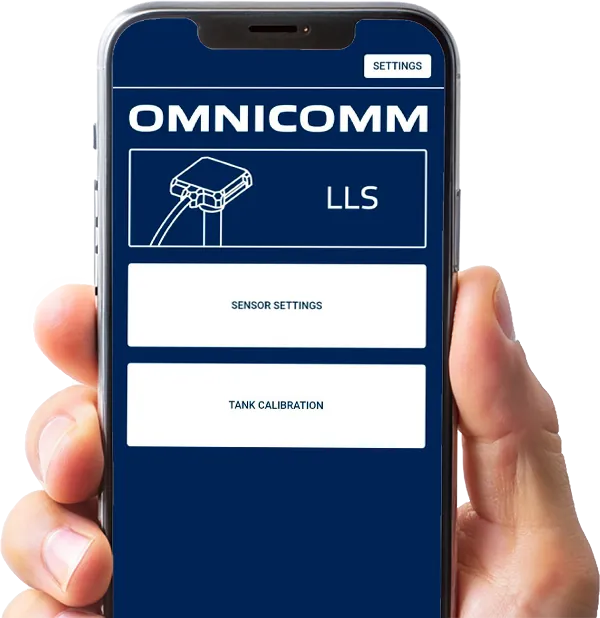
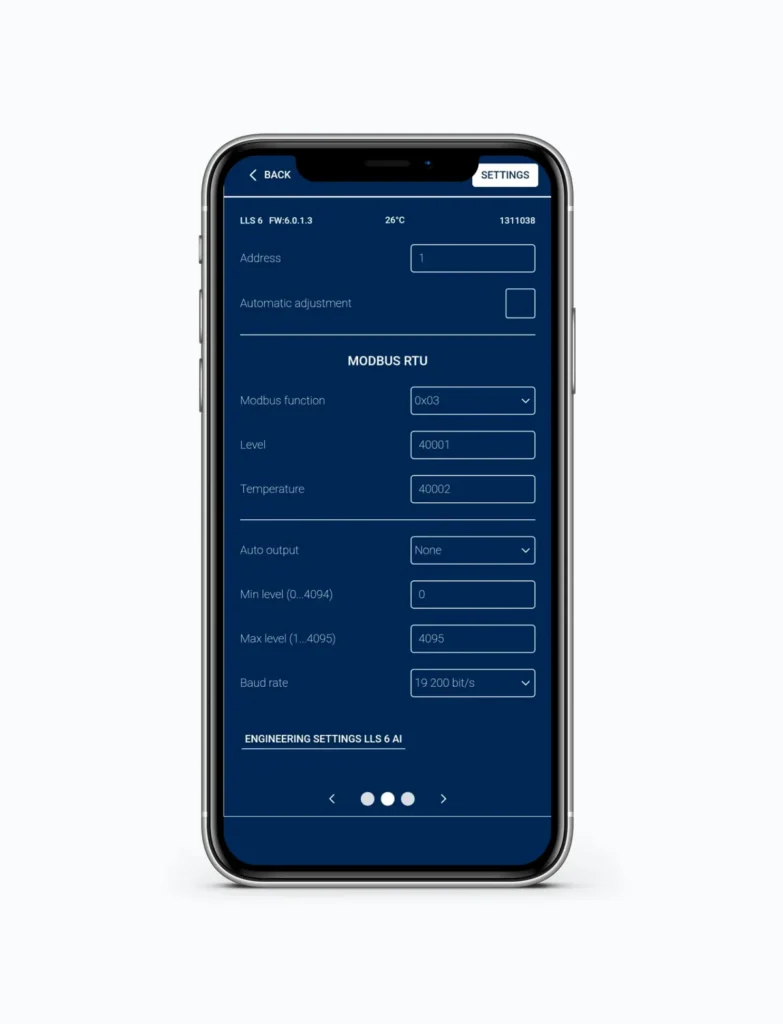
A fuel level sensor connects to a GPS tracker via an RS-232 or RS-485 digital interface, or via an analog voltage interface for older trackers. The OMNICOMM LLS protocol is an open industry standard supported by virtually every modern fleet telematics tracker, so most installations are plug-and-play. The tracker pairs the fuel reading with GPS location and uploads both to the fleet management platform.
The wiring is simple. The sensor has a four-wire cable: two for power (the tracker supplies 7 to 75 volts) and two for data on the RS-485 bus. The installer connects these to the tracker's matching pins per the tracker's wiring diagram. If a single tracker handles multiple tanks (twin-tank trucks, multi-tank tankers), up to four sensors can be daisy-chained on the same RS-485 bus, each with a unique address. For trackers that only accept analog input, the LLS-AF 4 model outputs a frequency-converted analog signal that bridges the gap. Once wiring is complete, the tracker is configured to recognize the sensor address and assign it to the correct tank, and CalibrateX runs the automated calibration to map sensor readings to actual liters. The whole wiring and configuration sequence for a single-tank vehicle takes a couple of hours, and the LLS protocol means the same workflow applies regardless of the tracker brand.
A standard single-tank installation takes about 40 minutes for the sensor itself. Manual tank calibration after that takes another 4 hours per tank, which dominates the total time. CalibrateX, OMNICOMM's automatic tank calibration software launched in 2026, eliminates the manual calibration step entirely and reduces total installation time by roughly 70%. End-to-end implementation, from goal-setting through testing, training, and commissioning, typically takes 60 days for a full ROI-ready deployment using OMNICOMM's 10-step methodology.
OMNICOMM uses a 10-step deployment methodology that has been refined across 2 million+ sensor installations: defining goals, pre-installation audit, project development, installer training, installation and configuration, bench testing, real-data testing with the live fleet, commissioning, project completion review, and ongoing support. For a fleet of 50 vehicles, total elapsed time is around 60 days from contract to full operational status. Per-vehicle, the sensor install runs about 40 minutes, but manual calibration adds roughly 4 hours and is the real bottleneck. CalibrateX replaces the manual calibration step with software-driven measurement, which alone takes around 70 percent off the total installation labor. Partner-led installations and self-installations by trained fleet teams are both supported. For complex multi-tank vehicles (tankers, twin-tank trucks, off-road equipment with separate auxiliary tanks), an experienced installer is recommended, and OMNICOMM's partner network covers most regions worldwide.
We use cookies for analytics and advertising. They are set only with your consent. Privacy policy