Heavy Machinery Operation Monitoring

Heavy Machinery Operation Monitoring

Heavy equipment monitoring from Omnicomm shows how every crane, excavator, loader, dump truck or drill rig really works: engine hours, idle versus productive time, operating modes and fuel burned per engine hour.

  • 1998on the market since
  • 1.5Mvehicles equipped
  • 100+countries
  • 30+industries

What heavy equipment monitoring tracks

Engine hours

Real operating time of every machine, per shift.

Litres per engine hour

Fuel burned for each hour of work.

Idle vs. work

Engine running with no load — found and measured.

Operating modes

Movement, work and idling split in reports.

Auxiliary equipment

When the crane, lift or PTO was actually on.

Engine RPM

Overloads and wrong modes that wear the engine.

How the heavy machinery monitoring system works

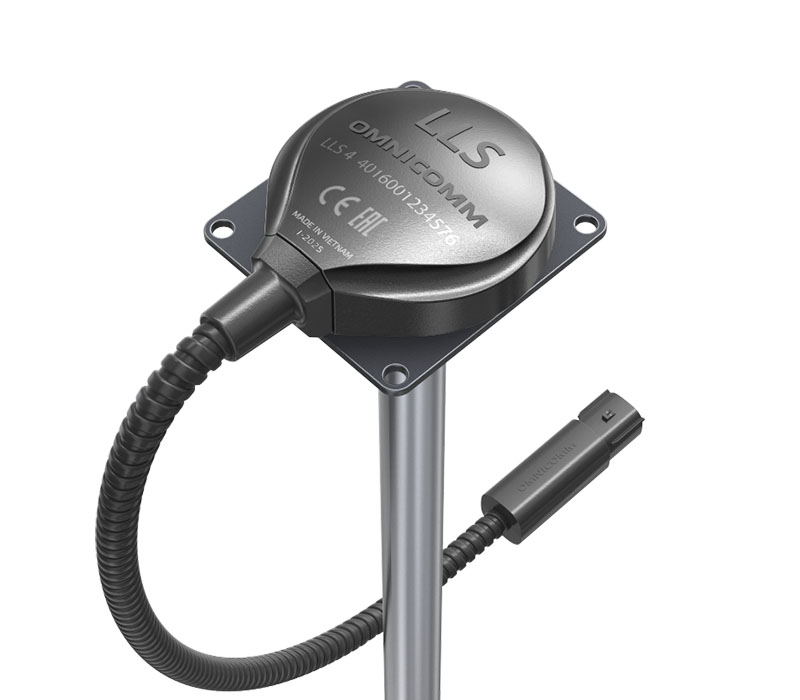
LLS 4

1. Sensor in the tank

Rugged LLS 4 measures fuel in vibration, dust and wash-downs.

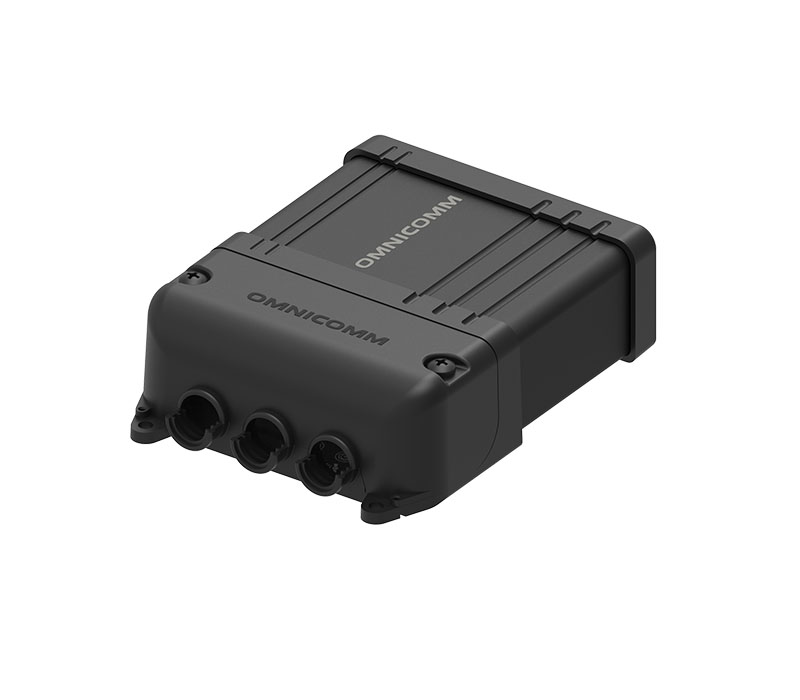
Omnicomm Profi GPS tracker for fuel consumption monitoring

2. Profi GPS tracker

Built for heavy machinery: IP54, wide voltage range, CAN and auxiliary inputs.

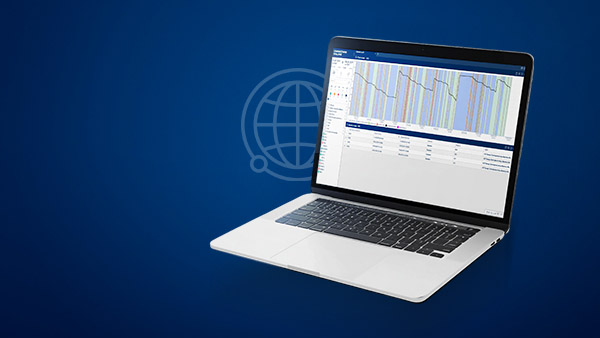
Omnicomm Online fuel consumption monitoring software

3. Omnicomm Online

Statistics, Shift and Auxiliary Equipment reports per machine.

Transport and Fuel Monitoring in Logistics

4. Alerts and service

Drains, overuse, and maintenance due by engine hours.

Heavy equipment monitoring results

350 L / week

fuel saved on 25 cranes · Barkat Cranes, India

Read the case →

30%

lower fuel costs, ROI in 1 month · Strabag, Romania

Read the case →

< 3 months

payback on dump trucks and machinery · NQC, Mexico

Read the case →

60%

fewer repairs on cranes, excavators, pavers · ARSS, India

Read the case →

How many engine hours do your machines idle?

Send us your equipment list — we will show what monitoring reveals and estimate the savings for free.

Heavy machinery monitoring for any equipment

Cranes

Including Europe’s largest 900-ton mobile crane.

Dump and haul trucks

Fuel per km on the road, per hour on site.

Mining equipment

Fuel management for mines →

Construction machinery

Excavators, loaders, pavers, mixers.

Remote sites

Works without cellular coverage →

Service by engine hours

Maintenance reminders and history →

Machinery performance monitoring: logbooks vs. sensors

Paper logbooksFactory gauge (CAN)Omnicomm system
Fuel actually in the tank✕approximate✓
Detects drains✕✕✓
Verifies refuelling✕often misses 20–50 L✓
Fuel per engine hourmanual estimateapproximatemeasured
Accuracydepends on the operatorup to 20% errorbelow 0.5% error

Heavy equipment monitoring system: engine hours, fuel and operating modes

A heavy equipment monitoring system collects data from each machine — engine hours, engine RPM, operating modes, auxiliary equipment and the fuel actually in the tank — and turns it into reports on how efficiently the machine works. Omnicomm combines rugged fuel level sensors, Profi GPS trackers built for heavy machinery and the Omnicomm Online platform.

Read more about heavy machinery monitoring

Why heavy machine monitoring is measured in engine hours

Excavators, cranes, loaders and drill rigs often work in one place, so mileage says little about their workload. Fuel consumption and wear are tracked per engine hour instead. Omnicomm Online splits engine time into movement, productive work and idling, and shows litres per engine hour for each machine, shift and operator, so heavy equipment operational efficiency can be compared across the fleet.

Operating modes, RPM and auxiliary equipment

The Profi tracker reads engine RPM, CAN bus data and auxiliary equipment inputs. The Auxiliary Equipment Operation report shows when and how long a crane, lift or other mechanism was engaged, and the Statistics report shows idle time and its causes. Together they reveal machines that run without load, work in the wrong mode or are overloaded.

Fuel control for heavy machinery

Factory fuel gauges read over the CAN bus have up to 20% error and often miss refuelling of 20–50 litres. Omnicomm capacitive sensors measure the fuel in the tank with an error below 0.5%, so every refuelling, drain and litre per engine hour is recorded. See fuel consumption control for details.

Maintenance, remote sites and results

Service intervals can be planned by engine hours with maintenance control. For quarries and pits without GSM, Profi Wi-Fi trackers store data and upload it later — see operation without cellular coverage. Fleets typically cut fuel costs by 25–35%, and most deployments pay back in 3–6 months.

Heavy equipment monitoring FAQ

What reports does Omnicomm Online provide?

Omnicomm Online ships with 50+ fuel and fleet analytics reports out of the box, covering consumption versus quotas, fill and drain events, driver behavior scoring, idle time, geofence breaches, maintenance schedules, and CO2 emissions. The platform tracks 150+ parameters per vehicle or asset and supports email and SMS alerts. Reports export to PDF and Excel, or pull into a BI dashboard via REST API.

The report library is organized by the three pillars of fuel efficiency. Fuel Operations reports cover loads (refueling events), drainings (unauthorized fuel removal), dispenses (fuel given to vehicles from depot tankers), and reconciliation between dispensed and received volumes. Fuel Consumption reports cover total consumption, actual L per 100 km for vehicles, actual L per hour for heavy machinery, quota comparison versus norms, and idle time waste. Fuel Usage reports cover consumption with auxiliary equipment on or off (PTO, refrigeration units), consumption inside or outside geofences, and consumption during specific route segments. On top of the standard library, partners can build custom reports using the report builder, and Enterprise Server customers can commission fully bespoke analytics. ESG reports include the standard scope 1 emissions calculation directly from fuel data, exportable in formats compatible with CSRD, SBTi, CDP, and GHG Protocol disclosures.

What are OMNICOMM Optim and Profi GPS trackers used for?

Optim 3.0 is the reliable freight-transport tracker. It supports GPRS and SMS, integrates easily with LLS sensors, and is rated IP52. Profi 3.0 is built for extreme conditions, with wide voltage tolerance, heavy vibration resistance, IP54, used in mining, construction, and fuel tankers. Profi 3.0 Wi-Fi adds local-network data transfer for sites with no cellular coverage. All trackers carry a 3-year warranty.

Optim 3.0 is the right choice for delivery vans, light commercial diesel trucks, and freight fleets operating in areas with stable cellular coverage. It is the lower-cost tracker in the lineup and integrates with standard fleet management workflows. Profi 3.0 steps up to handle the abuse heavy diesel machinery delivers daily: temperature extremes from minus 40 to plus 85 Celsius, voltage spikes from auxiliary equipment, vibration from off-road operation, and dust ingress from quarries and construction sites. It is the recommended tracker for diesel excavators, haul trucks, drilling rigs, cranes, and tankers. Profi 3.0 Wi-Fi adds a critical capability for remote operations: when the vehicle returns to a Wi-Fi hotspot at the depot or worksite, it offloads buffered data automatically. This is the standard for mining fleets in remote areas, agricultural operations across large fields, and any site where cellular service is unreliable or expensive. All three trackers speak the OMNICOMM LLS protocol over RS-485, which lets partners pair them with OMNICOMM sensors or mix and match with third-party hardware.

Can I use CAN bus data for fuel monitoring?

CAN bus data is generally not accurate enough for fleet fuel monitoring. The vehicle's CAN bus reports the factory dashboard gauge, which is typically a float-type sensor with up to 20% error and an upper dead zone that hides refueling events. CAN data can show approximate fuel level for the driver but cannot reliably detect refuelings, drains, or consumption anomalies, which are the events that drive ROI for a fleet.

Many fleet operators consider CAN bus as a no-extra-hardware option because GPS trackers can read it directly, so the appeal is clear. The trade-off is data quality. The factory fuel gauge inside almost every commercial vehicle uses a float-type sensor connected to the dashboard via the CAN bus. Float sensors have moving parts, blind spots at the top and bottom of the tank, and inherent measurement noise. The signal that reaches the CAN bus is filtered and smoothed by the vehicle's ECU specifically for human-readable display, not for analytics. Real refueling events of 20 to 50 liters often don't register cleanly because the upper dead zone hides them, and gradual drains are invisible. For fleets serious about detecting theft, idle waste, and consumption patterns, an aftermarket capacitive sensor such as OMNICOMM LLS is required. The capacitive sensor sees actual fuel level with sub-0.5% error and reports clean event data that CAN bus cannot produce.

How does fuel monitoring work at remote sites without reliable internet?

Remote sites without reliable cellular or wired internet are a core OMNICOMM use case. The fuel sensor itself is wired to a tracker via RS-485 / MODBUS and works independently of any network. The connected GPS tracker buffers events locally and uploads them on the next available link, whether that is cellular, Wi-Fi at a depot or fuel station, or a wired connection at base. No fuel data is lost during the offline period.

Mining haul trucks operating in pits with no cellular signal, agricultural tractors crossing fields beyond 4G coverage, forestry machinery deep in remote blocks, and offshore support vessels all share the same operating pattern: hours or days without an internet link, followed by occasional time at a base location. Any GPS tracker with enough onboard storage and a Wi-Fi or cellular uplink can handle this workflow; the choice depends on the buyer's existing fleet platform. OMNICOMM's Profi 3.0 Wi-Fi is one option and is built specifically for this pattern, with internal storage that buffers up to several weeks of detailed event data and automatic upload over Wi-Fi when the vehicle parks at a depot or fuel station hotspot. Third-party trackers that support the LLS protocol can deliver the same offline-then-upload behavior using their own buffer and uplink. Fides Mining in Brazil runs OMNICOMM sensors across a 260-vehicle fleet in remote Matupa using this approach. Agricultural and construction fleets in similar conditions follow the same workflow. For permanent installations on stationary generators or fuel tanks at remote sites, the same pattern applies: the chosen terminal handles offline buffering and periodic upload so a generator's daily fuel consumption is captured even when the site has no cellular service for weeks at a time.

How long does installation take?

A standard single-tank installation takes about 40 minutes for the sensor itself. Manual tank calibration after that takes another 4 hours per tank, which dominates the total time. CalibrateX, OMNICOMM's automatic tank calibration software launched in 2026, eliminates the manual calibration step entirely and reduces total installation time by roughly 70%. End-to-end implementation, from goal-setting through testing, training, and commissioning, typically takes 60 days for a full ROI-ready deployment using OMNICOMM's 10-step methodology.

OMNICOMM uses a 10-step deployment methodology that has been refined across 2 million+ sensor installations: defining goals, pre-installation audit, project development, installer training, installation and configuration, bench testing, real-data testing with the live fleet, commissioning, project completion review, and ongoing support. For a fleet of 50 vehicles, total elapsed time is around 60 days from contract to full operational status. Per-vehicle, the sensor install runs about 40 minutes, but manual calibration adds roughly 4 hours and is the real bottleneck. CalibrateX replaces the manual calibration step with software-driven measurement, which alone takes around 70 percent off the total installation labor. Partner-led installations and self-installations by trained fleet teams are both supported. For complex multi-tank vehicles (tankers, twin-tank trucks, off-road equipment with separate auxiliary tanks), an experienced installer is recommended, and OMNICOMM's partner network covers most regions worldwide.

Will I lose the vehicle warranty if I drill the fuel tank for sensor installation?

No. Installing a fuel level sensor by drilling the tank does not void the overall vehicle warranty. Manufacturer warranty law generally requires the manufacturer to prove that an aftermarket modification caused a specific failure before denying a claim. Since the sensor installation is limited to a sealed flange in the fuel tank, only tank-related failures could theoretically be in scope. Across nearly 2 million OMNICOMM installations worldwide, no client has reported a warranty refusal traceable to sensor installation.

The concern comes up often during procurement because the vehicle is a major asset and the warranty matters. The legal principle in most jurisdictions, often called the burden of proof doctrine, holds that the manufacturer cannot void a vehicle warranty just because the owner installed an aftermarket component; the manufacturer has to demonstrate that the modification specifically caused a specific failure. For a fuel level sensor installed through a small sealed opening in the top of the tank, the only failure scenario where the modification matters is a tank leak or contamination at the flange itself, which is a narrow technical case. OMNICOMM's installation procedure uses sealed mounting hardware designed to maintain tank integrity, and the cumulative record across millions of installations supports the conclusion that the modification is safe. The basic asset principle also applies: the vehicle belongs to its owner, who can install equipment on it as they choose. For specific concerns about a local jurisdiction or a specific vehicle model, partners can provide installation references and procedures that have been accepted by major manufacturers globally.

All questions →

BECOME OUR PARTNER OR CLIENT