Driver performance monitoring with Omnicomm ties speed, driving style, fuel consumption and working time to the person behind the wheel — not just to the vehicle.
Several drivers or shifts use one truck or machine.
Problems disappear at handover between drivers.
Drivers who keep breaking the rules stay hidden.
Each driver gets a personal card.

The driver is registered on the vehicle automatically.

Work periods per driver, automatic or manual.
Ranks drivers by driving style and fuel efficiency.
Speed and compliance with speed limits.
Quality of acceleration and braking.
Traffic rules and recurring violations.
Each driver’s L/100 km against fleet norms.
Work periods and operating time per driver.
RPM and operating modes from the CAN bus.
higher driver and operator salaries, paid from fuel savings · ARSS, India
fuel saved per trip, drivers’ fill data verified · Dhara Logistics
fuel economy with trackers, sensors and RFID · Fides Mining
to ROI, less adverse driver behavior · ABInBev Africa
Tell us about your fleet and shifts — we will show how driver ranking works in a demo.
| Paper logs | Omnicomm | |
|---|---|---|
| Who drove which vehicle, and when | manual | RFID, automatic |
| Speed and driving style per driver | ✕ | ✓ |
| Fuel consumption per driver | ✕ | ✓ |
| Driver ranking | ✕ | ✓ |
| Evidence in disputes | ✕ | ✓ |
A driver monitoring system for commercial vehicles collects operating data — speed, acceleration and braking, engine modes, fuel consumption and working time — and assigns it to the specific driver or operator, not only to the vehicle. Driver performance monitoring matters wherever several people use the same truck or machine: freight transport, construction, agriculture, mining and municipal services.
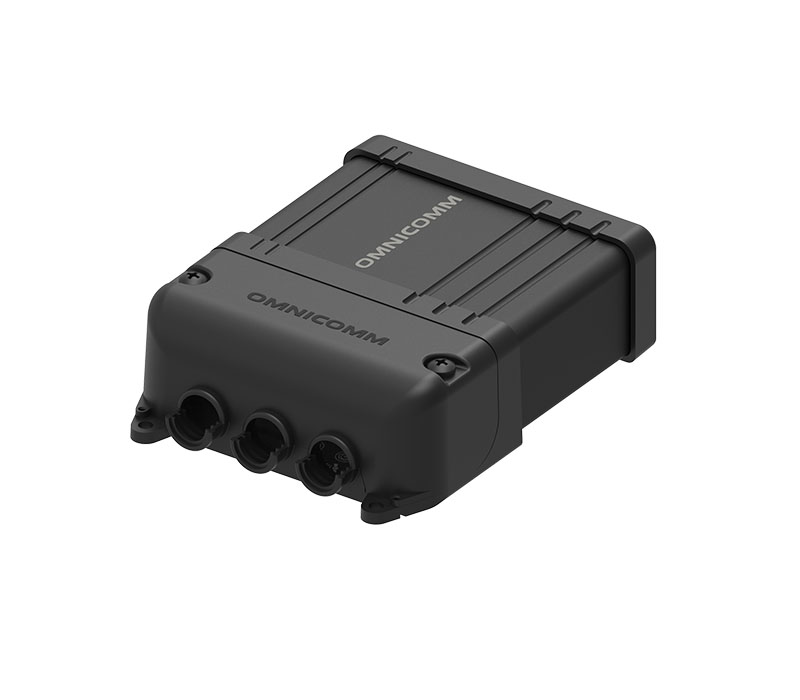
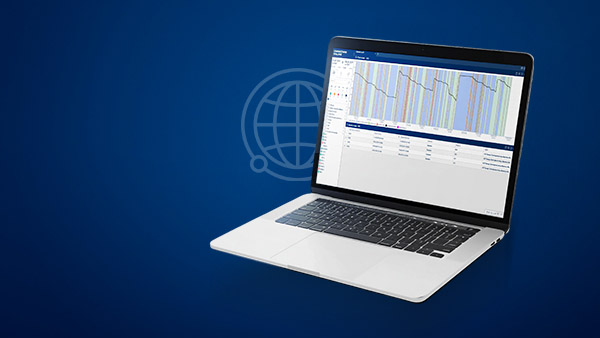
Each driver receives an RFID card. A reader connected to the GPS tracker reads the card and registers the driver on the vehicle automatically; manual registration is also possible. The Driver Registration report in Omnicomm Online shows the work periods of each driver, and the Statistics report collects vehicle operation data for the time the vehicle was assigned to that driver.
The Safe Driving module of Omnicomm Online assesses each driver’s style — speed, smooth acceleration and braking, compliance with traffic rules and fuel efficiency — and builds a driver ranking. Recurring violations become visible, coaching can focus on the drivers who need it, and good drivers can be recognized. Details on speed limits and harsh driving events are on the speed and driving behavior control page.
Fuel is where driver performance shows up in money. Comparing each driver’s L/100 km against fleet norms flags outliers, and fuel level sensors make drains and false refuelling traceable to a person — see fuel consumption control. ARSS Infrastructure in India used fuel savings to raise driver and operator salaries by 200%, and Dhara Logistics now cross-checks drivers’ filling data instead of relying on their word.
Driver data comes from the same tracker and platform as route and location monitoring and geofencing control, so every trip, zone visit and violation can be tied to the driver who was registered on the vehicle at that time. Driver assignments are also available through the REST API for HR and safety systems.
Fleets typically reduce fuel costs by 25-35% within the first months, and up to 50% in some industries. Documented results include 45% fuel economy at Fides Mining (Brazil), 32% savings at SBI International (Tanzania), 24% at ARSS Infrastructure in India (equal to $130,000 in monthly savings), and 12% in the first month at NQC Mexico (a $10,000 monthly saving with payback in under 3 months).
Savings stack on top of each other and the mix depends on how the fleet currently leaks fuel. Theft and fraud prevention is the largest one-time gain in month one after install: Belgrade Municipal's 500-vehicle fleet cut fuel consumption 15 to 40 percent within two months, with theft prevention as the dominant driver in the first weeks. Idle-time reduction comes next, as the platform surfaces vehicles burning fuel while parked and managers retrain the drivers responsible. Route and consumption optimization adds another layer by comparing each driver's L per 100 km against fleet norms and flagging the outliers. Maintenance-driven savings round out the picture, since catching engine inefficiencies early prevents fuel-burn drift. To estimate your own savings, take your current monthly fuel spend, run a conservative 15 percent reduction (idle and consumption alone) and a realistic 30 percent (theft prevention included), and compare against the system cost over 12 months. Most fleets break even well before year-end.
Yes. Fuel theft costs the global transport industry over $1.2 billion every year, and 73% of commercial fleets are hit annually, most of it internal. Precision sensors detect every drain event, even small repeated drains under 5 liters, and trigger instant alerts. Fleets typically eliminate detectable theft within the first 1-2 months of installation.
Fuel theft takes more forms than most operations managers realize, especially on diesel truck and heavy-equipment fleets where the per-tank value of fuel is high. Direct siphoning from the diesel tank is the obvious pattern, but the costlier ones are false refueling (the driver buys 80 liters on the fuel card and only 60 reach the tank), ghost loads (the tanker arrives at the depot reporting full but is partially empty), and fuel card fraud (cards used to fill non-fleet vehicles). A precision fuel monitoring system catches all four because the in-tank sensor reports the actual liters received and the timing of every change. The platform compares fuel card transactions, depot dispenses, and sensor data and flags every mismatch. A municipal fleet of 500 vehicles in Belgrade cut fuel consumption 15 to 40 percent within two months of installing OMNICOMM equipment. Transportes Masa in Colombia identified and eliminated previously invisible theft after switching from CANBUS data to dedicated LLS sensors. The first month after deployment is usually when the largest reductions appear.
Omnicomm Online ships with 50+ fuel and fleet analytics reports out of the box, covering consumption versus quotas, fill and drain events, driver behavior scoring, idle time, geofence breaches, maintenance schedules, and CO2 emissions. The platform tracks 150+ parameters per vehicle or asset and supports email and SMS alerts. Reports export to PDF and Excel, or pull into a BI dashboard via REST API.
The report library is organized by the three pillars of fuel efficiency. Fuel Operations reports cover loads (refueling events), drainings (unauthorized fuel removal), dispenses (fuel given to vehicles from depot tankers), and reconciliation between dispensed and received volumes. Fuel Consumption reports cover total consumption, actual L per 100 km for vehicles, actual L per hour for heavy machinery, quota comparison versus norms, and idle time waste. Fuel Usage reports cover consumption with auxiliary equipment on or off (PTO, refrigeration units), consumption inside or outside geofences, and consumption during specific route segments. On top of the standard library, partners can build custom reports using the report builder, and Enterprise Server customers can commission fully bespoke analytics. ESG reports include the standard scope 1 emissions calculation directly from fuel data, exportable in formats compatible with CSRD, SBTi, CDP, and GHG Protocol disclosures.
Yes. A unified vehicle tracking and fuel monitoring system pairs a GPS tracker (capturing location, speed, ignition, and driver behavior) with a connected LLS fuel sensor (capturing the in-tank fuel level), with both data streams flowing into one software platform. OMNICOMM LLS sensors plug into any tracker that supports the LLS protocol, which is virtually every modern fleet telematics terminal, so the combined platform can be built on the OMNICOMM stack or on the buyer's existing telematics provider.
Running tracking and fuel monitoring as separate platforms is the most common operational pain point fleets bring to OMNICOMM. Two platforms means two licenses, two dashboards, two sets of alerts, and constant data reconciliation between systems whose timestamps and vehicle IDs often disagree. A unified architecture eliminates that overhead. A single login shows real-time vehicle position on the map with fuel level overlaid, every refuel event is geo-tagged to the station where it happened, and every drain event is tagged to the location and driver responsible. Reports combine route, speed, idle time, fuel consumption, and theft alerts in one view. For fleets already running a third-party tracking platform they want to keep, OMNICOMM LLS sensors integrate directly via the LLS protocol so fuel data feeds into the existing telematics platform without forcing a switch. White-label partners often deliver the combined platform under their own brand.
Yes. Omnicomm Online is a responsive web application that runs in any modern browser on a desktop, tablet, or smartphone. Fleet managers, dispatchers, and operators log in from any device with internet access and see the same real-time fuel and location data. No native app installation is required, the platform is GDPR compliant, and access is role-based.
The web-first approach is intentional and has three practical benefits. New features and bug fixes roll out instantly to every user without app-store review cycles or version fragmentation across the fleet. IT teams do not have to push installations to drivers' personal devices, which is the biggest source of friction in mobile-app rollouts. And partners running white-label deployments maintain a single platform rather than separate iOS, Android, and web codebases. Critical events such as fuel drains, geofence breaches, and threshold consumption are delivered through email and SMS alerts, so important notifications reach the right person whether they are at a desktop or on the road. OMNICOMM does not ship a native iOS or Android app and has no plans to, since the web platform delivers the same functionality at a lower lifecycle cost. White-label partners with a specific reason to ship a branded native app can build their own native shell over the responsive web platform.
We use cookies for analytics and advertising. They are set only with your consent. Privacy policy