Fuel level sensors

An Omnicomm fuel level sensor measures the fuel actually in the tank with an error below 0.5% — every refuelling, drain and litre burned is recorded. Capacitive design, no moving parts, lifetime warranty.

  • 1998fuel level sensor manufacturer since
  • 1.5Mvehicles equipped
  • 100+countries
  • < 0.5%measurement error

Choose your Omnicomm fuel level sensor

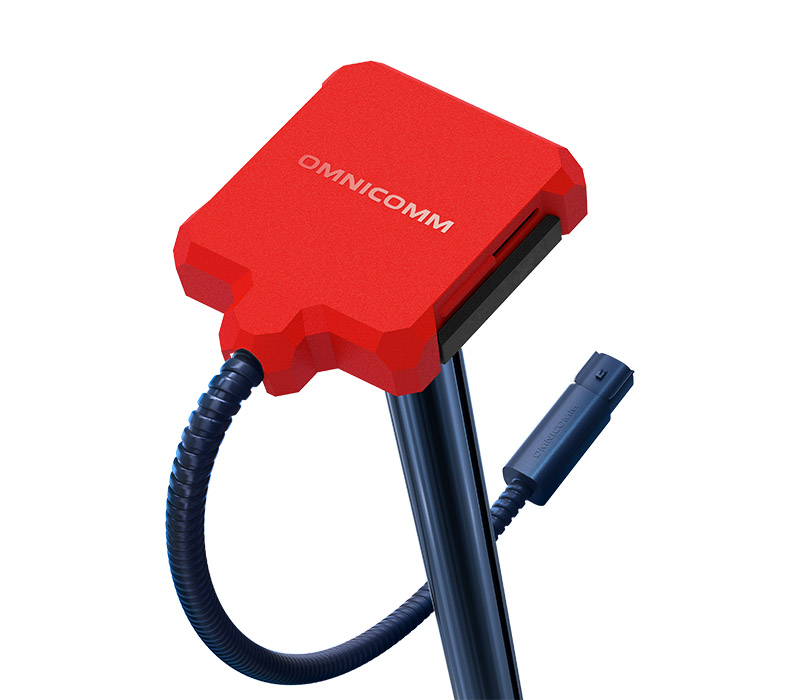
LLS 6 AI

LLS 6 AI

On-board AI cleans the data — lowest drain and refuelling thresholds. ±0.5%.

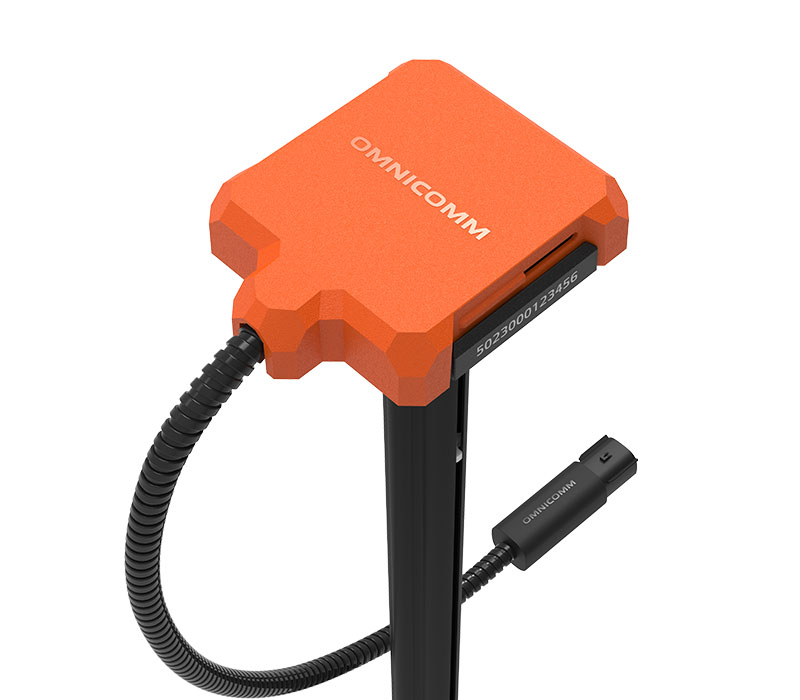
Omnicomm LLS 5 capacitive fuel level sensor

LLS 5

FuelScan adapts to any fuel. The standard for trucks and machinery. ±0.5%.

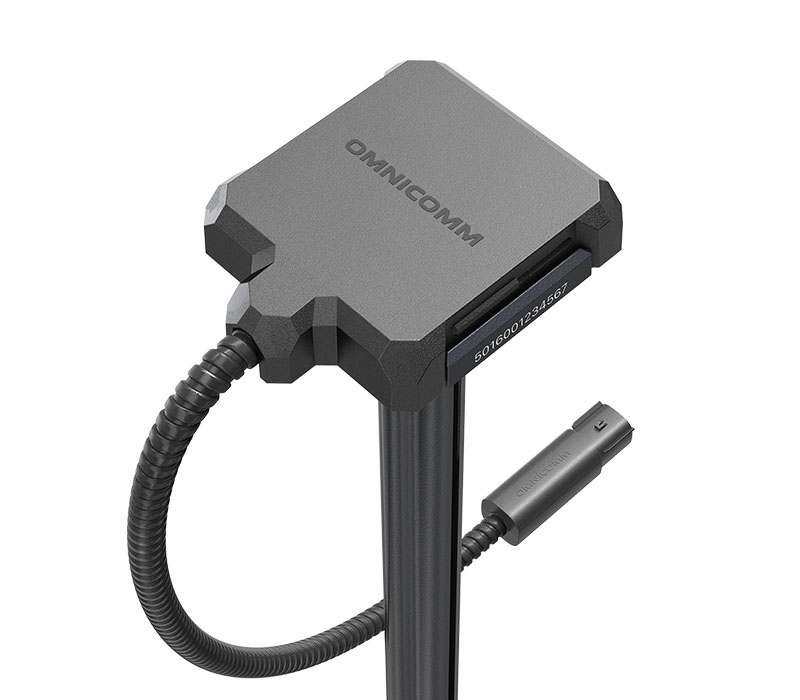
LLS-Ex 5

LLS-Ex 5

ATEX-certified for tankers, depots and hazardous zones. Probe up to 6 m.

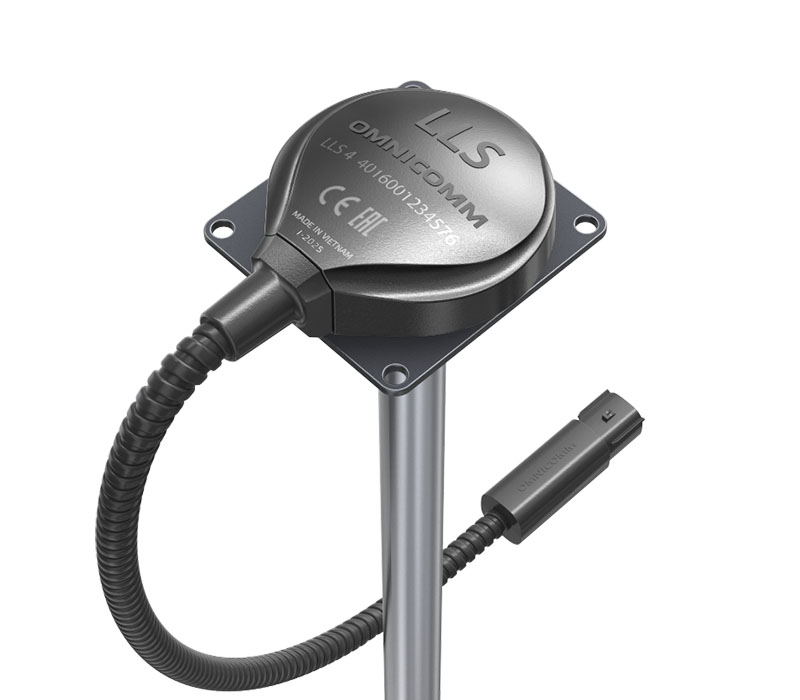
LLS 4

LLS 4

Rugged, compact head for heavy machinery, rail, mining and farming. ±1%.

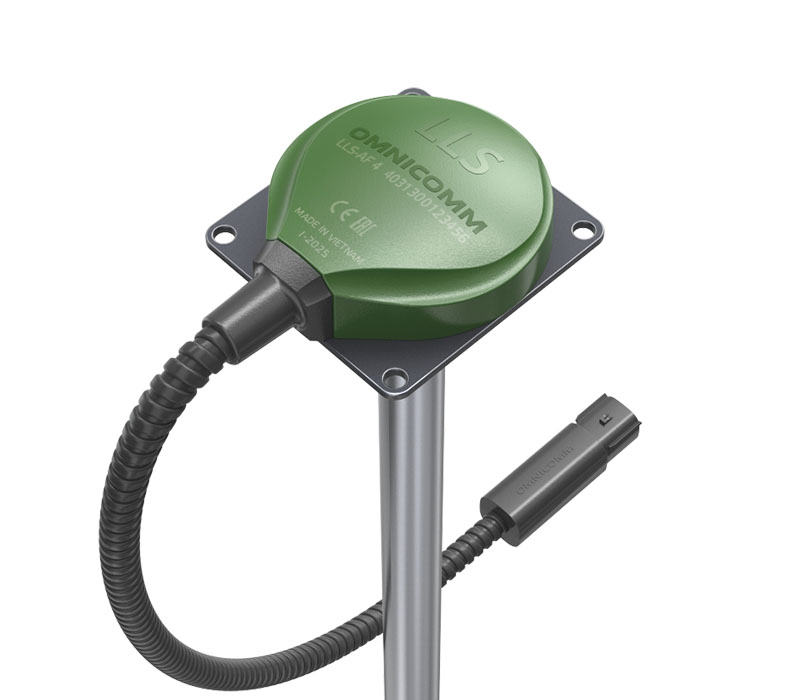
LLS-AF 4

LLS-AF 4

Analog and frequency output for trackers without digital inputs. ±1%.

Transport and Fuel Management in Construction

Not sure which one?

Send us your vehicles and tanks — we will pick the model.

Key specs at a glance

AccuracyOutputFuelScanBuilt-in AIBest for
LLS 6 AI±0.5%RS-485✓✓cleanest data, minimal thresholds
LLS 5±0.5%RS-232, RS-485✓✕trucks and machinery
LLS-Ex 5±0.5%RS-232, RS-485✓✕ATEX zones, tanks up to 6 m deep
LLS 4±1%RS-232, RS-485✕✕harsh, high-vibration machinery
LLS-AF 4±1%analog, frequency✕✕trackers without digital inputs

How a capacitive fuel level sensor works

Transport and Fuel Management in Construction

1. Probe in the tank

Two electrodes run the full depth of the tank.

Transport and Fuel Management in Construction

2. Fuel changes capacitance

The higher the fuel level, the higher the capacitance.

Transport and Fuel Management in Construction

3. FuelScan corrects

Adjusts for fuel type, temperature and vibration.

Transport and Fuel Monitoring in Logistics

4. Data to the tracker

Level every second via RS-232/RS-485 (LLS protocol).

Accurate fuel level sensor vs float gauge and CAN data

Factory float gaugeCAN bus dataOmnicomm capacitive sensor
Measurement errorup to 20%up to 20%below 0.5%
No dead zones at top and bottom✕✕✓
Registers every refuelling✕often misses 20–50 L✓
Detects drains✕✕✓
Adapts to fuel composition✕✕✓
No moving parts✕✕✓
Warrantyreplace every 12–18 months—lifetime
No extra hardware✓✓✕

Why Omnicomm as your fuel level sensor manufacturer

Since 1998

Inventor of fuel monitoring for vehicles.

LLS protocol

Supported by most GPS tracker makers worldwide.

Lifetime warranty

On every LLS sensor, for its full service life.

Certified

ISO 9001:2015, ATEX, CE, E-Mark, FCC.

Cut to fit

Probe is cut to your tank depth on site.

IP69K

Sealed, shock-resistant monolithic body.

Fuel sensor for trucks, machinery and fuel tanks

Trucks and logistics

Long-haul and delivery fleets.

Construction

Excavators, cranes, generators.

Mining

Haul trucks in remote pits.

Agriculture

Tractors and harvesters.

Tankers and depots

Hazardous zones with LLS-Ex 5.

Maritime

Vessels and bunker tanks.

Results with Omnicomm fuel level sensors

$130,000

monthly savings, 24% less fuel · ARSS, India

Read the case →

45%

fuel economy · Fides Mining, Brazil

Read the case →

32%

fuel savings · SBI, Tanzania

Read the case →

< 3 months

payback · NQC, Mexico

Read the case →

Which fuel level sensor fits your tanks?

Tell us your vehicles and tank sizes — we will recommend the model and estimate the payback for free.

Fuel level sensor: how to choose the right one

A fuel level sensor is a probe installed in a vehicle or stationary tank that measures how much fuel is inside and sends the reading to a GPS tracker. Omnicomm makes capacitive fuel level sensors that measure with an error below 0.5%, so fleets can see every refuelling, every drain and the real consumption of each vehicle and machine.

Read more about fuel level sensors

Capacitive fuel level sensor vs float sensor

A capacitive fuel level sensor measures the capacitance between two electrodes along the probe: fuel has a higher dielectric constant than air, so capacitance grows with the fuel level. There are no moving parts to wear out, jam or corrode. Float sensors and the factory gauge read over the CAN bus have up to 20% error and dead zones at the top and bottom of the tank, so small drains and partial refuelling go unnoticed.

Accuracy in real conditions

Fuel from different stations and biodiesel blends has different properties. Patented FuelScan technology in LLS 5, LLS-Ex 5 and LLS 6 AI detects these changes and corrects readings automatically, without recalibration. LLS 6 AI adds an on-board neural network that filters spikes from sloshing and vibration before the data reaches the tracker.

Fuel sensor for trucks and heavy machinery

For most diesel trucks, LLS 5 or LLS 6 AI is the recommended choice. LLS 4 suits machinery working under heavy vibration and harsh conditions, LLS-AF 4 connects to trackers with analog or frequency inputs only, and the ATEX-certified LLS-Ex 5 is used in fuel tankers, depots and other hazardous zones. Probes are cut to the tank depth during installation.

Fuel level monitoring sensor for any telematics system

Omnicomm sensors send data via RS-232 or RS-485 using the Omnicomm LLS protocol, which is supported by most GPS tracker manufacturers. They work with Omnicomm Optim and Profi trackers and with third-party terminals, and the data can be analysed in Omnicomm Online or your own fleet management platform.

A fuel level sensor manufacturer since 1998

Omnicomm has been designing fuel level sensors since 1998 and has equipped more than 1.5 million vehicles in over 100 countries. All LLS sensors carry a lifetime warranty, and typical deployments pay back in 3 to 6 months.

Fuel level sensor FAQ

How does a capacitive fuel level sensor work?

A capacitive fuel level sensor measures the electrical capacitance between two electrodes immersed in the tank. As fuel level rises and falls, the dielectric permittivity between the electrodes changes, and the sensor converts that change into a precise fuel-level reading. Capacitive sensors have no moving parts, which is why they outlast float-type alternatives.

The physics is simpler than it sounds. Air has a low dielectric constant (epsilon close to 1), and diesel has a higher one (around 2). When you slide a sensor probe vertically into a tank that fills with fuel, the average dielectric between its two electrodes rises proportionally to the fuel level. The sensor measures this electrical property a thousand times per second and outputs a value on a 0 to 4095 scale, which the on-vehicle tracker then converts to liters using the tank calibration table. Because no part of the sensor physically moves, there is nothing to wear out, no float to corrode, and no rod to bend. OMNICOMM LLS sensors are built into a sealed monolithic body rated IP69K, with a designated service life of 8 years and a lifetime warranty. The OMNICOMM LLS communication protocol has become the industry standard, supported by most major telematics terminal manufacturers worldwide.

What is the difference between a capacitive fuel sensor and a float-type sensor?

Float-type sensors use a mechanical floater that moves with the fuel level. They are cheap but inaccurate (up to 20% error), have blind spots at the top and bottom of the tank, and wear out. Capacitive sensors like OMNICOMM LLS have no moving parts, achieve below 0.5% error, work in any tank shape, and carry a lifetime warranty.

For consumer cars and very small fleets, factory-fitted float gauges are fine because the buyer just needs a rough indication of when to refuel. For any commercial fleet where fuel is a budget line item, float-type sensors fail in three ways. They miss small drains and gradual theft because the floater jitters and the data is noisy. They develop dead zones near the top and bottom of the tank where the floater stops moving accurately. And the mechanical components corrode and bend over time, requiring replacement every 12 to 18 months. Capacitive sensors solve all three problems by removing moving parts and measuring electrical properties of the fuel itself. OMNICOMM offers three current sensor families: LLS 4 (the workhorse for harsh environments like construction and mining), LLS 5 (the high-precision standard with FuelScan auto-adaptation), and LLS 6 AI (the flagship with on-board neural network data smoothing, launched in 2025).

How accurate are fuel level sensors?

OMNICOMM LLS sensors deliver below 0.5% measurement error in real-world conditions, regardless of fuel type or composition, because FuelScan auto-adapts the sensor on the fly. On a 650-liter truck tank that means roughly plus or minus 3 liters, well within the 2 liters lost in the gas-station nozzle itself. By comparison, the factory dashboard gauge typically misses refueling events by up to 20 percent because it has an upper dead zone where the gauge stops moving even though more fuel is going in.

Accuracy in fuel monitoring is meaningless without two qualifiers: the conditions and the fuel. Most sensor brands quote a single accuracy figure from a lab test using one specific fuel type and composition at room temperature, and that figure only holds for that exact fuel. In the real world, composition changes every time the vehicle refuels at a different station, temperature swings from minus 40 to plus 60 Celsius depending on climate, and vibration is constant. OMNICOMM publishes its accuracy as below 0.5% across the full operating range (minus 40 to plus 85 Celsius, any biodiesel blend below epsilon 5, any tank shape calibrated correctly) regardless of fuel type or composition, because FuelScan continuously detects composition changes and recalibrates the sensor reading. The practical implication for fleets is that you can trust the data enough to investigate every flagged drain event without burning analyst time on false alarms. Even within the OMNICOMM lineup, LLS 4 reports 99.2% accuracy, LLS 5 reaches 99.5%, and the LLS 6 AI flagship exceeds 99.5% with neural network smoothing applied to raw readings.

What are the latest-generation fuel level sensors, and how do they differ from older designs?

The latest-generation professional fuel level sensors are OMNICOMM's LLS 5 and LLS 6 AI, defined by patented FuelScan auto-adaptation, 2,500V galvanic isolation, and multi-loop data filtering. Because FuelScan is patented, OMNICOMM is currently the only manufacturer shipping sensors that auto-adapt to changing fuel composition at the unit level. The earlier LLS 4 remains in production as the proven workhorse for fleets in extreme mechanical conditions where rugged durability is the priority.

LLS 4 is built for environments that punish electronics: a wide operating range down to minus 60 Celsius (versus minus 40 on the next-gen line), high vibration tolerance, and a long track record in construction, mining, agriculture, and railway equipment. It remains the right choice where mechanical durability outweighs the value of the newest electronics. LLS 5 and LLS 6 AI form the next-generation professional class. FuelScan auto-adaptation recalibrates the sensor in real time when fuel composition changes, 2,500V galvanic isolation protects against voltage surges, multi-loop data filtering strips noise from vibration and temperature, and improved EMI protection keeps readings stable across electrical environments. LLS 5 is the new precision standard for city logistics, ESG reporting, and any operation where stable, false-alarm-free data is the priority. LLS 6 AI extends the platform with an on-board neural network that smooths raw readings before they leave the sensor, the first fuel level sensor with this capability. LLS 6 AI is the recommended choice for premium fleet deployments and operators using fuel data as part of a regulatory audit trail. All three carry a lifetime warranty across the full 8-year designated service life.

How does a fuel level sensor connect to a GPS tracker?

A fuel level sensor connects to a GPS tracker via an RS-232 or RS-485 digital interface, or via an analog voltage interface for older trackers. The OMNICOMM LLS protocol is an open industry standard supported by virtually every modern fleet telematics tracker, so most installations are plug-and-play. The tracker pairs the fuel reading with GPS location and uploads both to the fleet management platform.

The wiring is simple. The sensor has a four-wire cable: two for power (the tracker supplies 7 to 75 volts) and two for data on the RS-485 bus. The installer connects these to the tracker's matching pins per the tracker's wiring diagram. If a single tracker handles multiple tanks (twin-tank trucks, multi-tank tankers), up to four sensors can be daisy-chained on the same RS-485 bus, each with a unique address. For trackers that only accept analog input, the LLS-AF 4 model outputs a frequency-converted analog signal that bridges the gap. Once wiring is complete, the tracker is configured to recognize the sensor address and assign it to the correct tank, and CalibrateX runs the automated calibration to map sensor readings to actual liters. The whole wiring and configuration sequence for a single-tank vehicle takes a couple of hours, and the LLS protocol means the same workflow applies regardless of the tracker brand.

Can I use CAN bus data for fuel monitoring?

CAN bus data is generally not accurate enough for fleet fuel monitoring. The vehicle's CAN bus reports the factory dashboard gauge, which is typically a float-type sensor with up to 20% error and an upper dead zone that hides refueling events. CAN data can show approximate fuel level for the driver but cannot reliably detect refuelings, drains, or consumption anomalies, which are the events that drive ROI for a fleet.

Many fleet operators consider CAN bus as a no-extra-hardware option because GPS trackers can read it directly, so the appeal is clear. The trade-off is data quality. The factory fuel gauge inside almost every commercial vehicle uses a float-type sensor connected to the dashboard via the CAN bus. Float sensors have moving parts, blind spots at the top and bottom of the tank, and inherent measurement noise. The signal that reaches the CAN bus is filtered and smoothed by the vehicle's ECU specifically for human-readable display, not for analytics. Real refueling events of 20 to 50 liters often don't register cleanly because the upper dead zone hides them, and gradual drains are invisible. For fleets serious about detecting theft, idle waste, and consumption patterns, an aftermarket capacitive sensor such as OMNICOMM LLS is required. The capacitive sensor sees actual fuel level with sub-0.5% error and reports clean event data that CAN bus cannot produce.

Can I cut a fuel level sensor to fit my tank?

Yes. OMNICOMM LLS fuel level sensors are designed to be cut in the field to match the depth of the tank. Measure the tank depth, mark the sensor at the right length, cut with a hacksaw following the installation manual, and the sensor automatically adapts to the new length during commissioning. No factory recalibration is required, which is what makes the sensor practical to install in any tank.

This is one of the design choices that separates OMNICOMM LLS sensors from aircraft-style precision sensors that have to be ordered to exact length specifications. In real-world fleet installations, tank depths vary across vehicle models and even across vehicles of the same model after retrofits, so a field-adjustable design is what makes large rollouts realistic. The installer measures from the mounting flange to the bottom of the tank, marks the sensor a few centimeters above the bottom so it does not touch the tank under flex, and cuts the probe with a standard hacksaw. The sensor's internal electronics detect the new physical length during the first calibration cycle and adjust the measurement curve accordingly. The detailed step-by-step procedure is in the LLS installation manual that ships with every sensor and is available from the partner network or via the contact form.

What warranty should I expect on a fuel level sensor?

All OMNICOMM LLS fuel level sensors carry a lifetime warranty covering the full 8-year designated service life. By comparison, competitor sensor warranties range from 12 months to 5 years. GPS trackers (Optim, Profi, Profi Wi-Fi), displays (ICON, LLD), and configuration devices (UNU-USB, BIS-MX) come with a 3-year warranty. Splitter KTZ-MX carries a 1-year warranty.

The lifetime warranty on LLS sensors is a structural cost advantage. Over an 8-year vehicle lifecycle, a fixed-term warranty on the sensor often means planning a replacement before the vehicle itself retires; the lifetime warranty removes that line item from the budget. OMNICOMM's warranty covers manufacturing defects and component failures across the full service life, returns are handled through the regional business development contact, and replacement units ship from regional warehouses to minimize downtime. Consumables such as cables, mounting kits, gaskets, and seals are not covered under warranty (they are commodity items and inexpensive to replace). For the BIS-MX spark protection unit used with LLS-Ex 5 sensors, the 3-year warranty is the standard, and the BIS-MX itself is required for ATEX compliance.

Will I lose the vehicle warranty if I drill the fuel tank for sensor installation?

No. Installing a fuel level sensor by drilling the tank does not void the overall vehicle warranty. Manufacturer warranty law generally requires the manufacturer to prove that an aftermarket modification caused a specific failure before denying a claim. Since the sensor installation is limited to a sealed flange in the fuel tank, only tank-related failures could theoretically be in scope. Across nearly 2 million OMNICOMM installations worldwide, no client has reported a warranty refusal traceable to sensor installation.

The concern comes up often during procurement because the vehicle is a major asset and the warranty matters. The legal principle in most jurisdictions, often called the burden of proof doctrine, holds that the manufacturer cannot void a vehicle warranty just because the owner installed an aftermarket component; the manufacturer has to demonstrate that the modification specifically caused a specific failure. For a fuel level sensor installed through a small sealed opening in the top of the tank, the only failure scenario where the modification matters is a tank leak or contamination at the flange itself, which is a narrow technical case. OMNICOMM's installation procedure uses sealed mounting hardware designed to maintain tank integrity, and the cumulative record across millions of installations supports the conclusion that the modification is safe. The basic asset principle also applies: the vehicle belongs to its owner, who can install equipment on it as they choose. For specific concerns about a local jurisdiction or a specific vehicle model, partners can provide installation references and procedures that have been accepted by major manufacturers globally.

What’s the difference between a fuel level sensor and a fuel flow meter?

Fuel level sensors and fuel flow meters are two different technologies, each with its own strengths. A level sensor sits inside the tank and measures how much diesel or other fuel is there, capturing every fill, drain, and consumption event including theft from the tank. A flow meter is installed in the fuel line and measures fuel passing to the engine, with very high short-term accuracy on each transaction but no visibility into what happens inside the tank.

The flow meter's strength is short-burst precision: it can measure a 50-liter transfer at a fuel pump to a tenth of a liter. The trade-offs are real. Flow meters do not detect events such as theft, drain, or refueling at unauthorized stations because they only see fuel that has already left the tank. Errors accumulate over time, since every transaction adds its own small measurement bias. And there is a physical risk: if a sand grain or debris particle reaches the meter, the moving element can jam and block fuel flow to the engine, which on a working vehicle is a serious failure mode. Level sensors avoid all three problems. They monitor the tank itself with no moving parts in the fuel line, accumulate no transaction error, and detect every event including in-tank theft. The strongest setup in some applications combines both: in mobile fuel dispensers, for example, a level sensor sits in the tanker to track the total fuel volume in storage, while a flow meter measures each dispense transaction at the nozzle. The two technologies cross-verify each other, with the level sensor providing the long-term baseline and the flow meter providing per-transaction precision. For fleet vehicle applications, where the priority is detecting theft and consumption anomalies from inside the tank, a level sensor is the right primary tool.

Are capacitive fuel sensors compatible with biodiesel and alternative fuels?

Yes. OMNICOMM LLS sensors work with any fuel with a dielectric constant below 5, which covers all common biodiesel blends (B5, B20, B100) and most alternative fuels. FuelScan auto-adaptation recalibrates on the fly when fuel composition changes, so you don't need manual recalibration every time a vehicle refuels at a different station.

Biodiesel blends are mandated at rising percentages across the EU, Brazil, the United States, and parts of Southeast Asia, and each blend has a slightly different dielectric constant than petroleum diesel. Without auto-adaptation, a sensor calibrated for B0 (pure diesel) will misread fuel as soon as the fleet starts buying B7 or B20. Manual recalibration per blend is impractical for trucks that refuel at random stations along a route. OMNICOMM LLS 5, LLS-Ex 5, and LLS 6 AI sensors include FuelScan, which continuously monitors fuel composition and adjusts readings without requiring fleet operators to intervene. The same logic applies to renewable diesel (HVO), winter blends with cold-flow additives, and regional fuel formulations. For fleets in countries pushing aggressive biofuel mandates, this is a structural advantage. Legacy single-probe sensors lose accuracy with each blend change, while FuelScan-equipped sensors hold their 99.5% accuracy across the full fuel landscape.

Read more: Biodiesel is quietly breaking your data and why entry-level sensors overread on B20.

All questions →

BECOME OUR PARTNER OR CLIENT