Omnicomm fuel consumption monitoring system shows how much fuel every vehicle and machine really burns — and where it is lost. Fleets cut fuel costs by 25–35%, with payback in 3–6 months.
Invisible without a sensor in the tank.
Factory gauges and CAN data err by up to 20%.
Fuel burned with no useful work done.

Measures fuel with an error below 0.5%.

Ties every litre to kilometres and engine hours.

Compares actual fuel consumption with norms.
Drains, refuelling and overuse — as they happen.
For trucks and buses covering long distances.
For construction, mining and farm machinery working on site.
monthly savings · ARSS, India
fuel economy · Fides Mining, Brazil
fuel savings · SBI, Tanzania
payback · NQC, Mexico
Send us your fleet size and fuel spend — we will calculate the payback for free.
Fuel consumption per vehicle, driver and period.
Fuel card litres vs litres in the tank.
Time, place and volume of every drain.
Speed and engine RPM vs fuel burned.
Spot units with abnormal fuel consumption.
Export to ERP, accounting and fuel card systems.
| Fuel cards | CAN bus data | Omnicomm sensor | |
|---|---|---|---|
| Fuel actually in the tank | ✕ | approximate | ✓ |
| Detects drains | ✕ | ✕ | ✓ |
| Verifies refuelling | ✕ | often misses 20–50 L | ✓ |
| Accuracy | purchases only | up to 20% error | below 0.5% error |
| No extra hardware | ✓ | ✓ | ✕ |
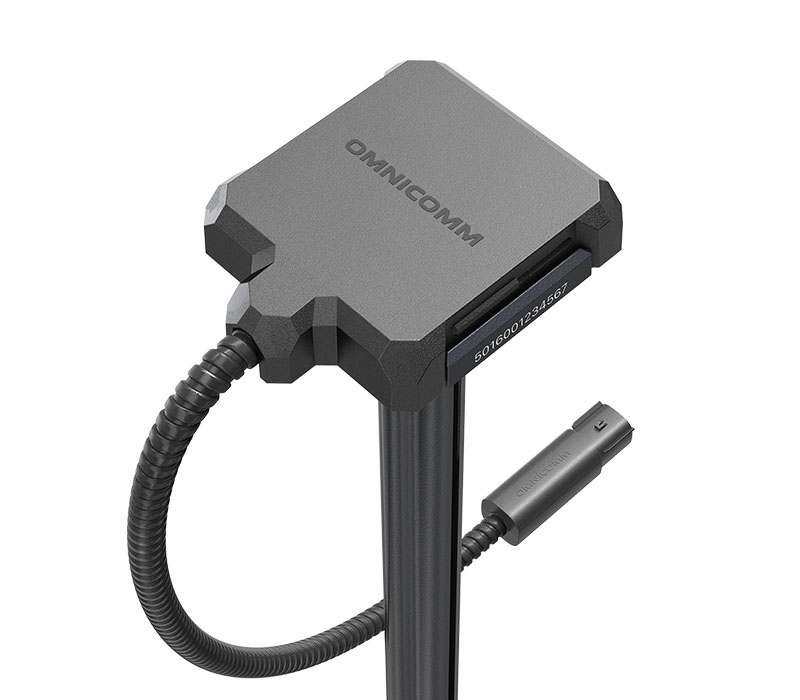
A fuel consumption monitoring system measures how much fuel each vehicle or machine actually uses and links it to the work done. Omnicomm combines capacitive fuel level sensors, GPS trackers and the Omnicomm Online platform, so fleet managers can monitor fuel consumption in litres per 100 km or per engine hour, compare it with norms and act on every deviation.
Fuel cards only show what was purchased, and the factory fuel gauge read over the CAN bus is a float-type sensor with up to 20% error and dead zones at the top and bottom of the tank. Refuelling of 20–50 litres is often not registered, and gradual drains stay invisible. Omnicomm capacitive sensors measure the fuel actually in the tank with an error below 0.5%, and FuelScan technology adapts the sensor to changes in fuel composition, so every refuelling, drain and litre consumed is recorded reliably.
For trucks and buses that cover long distances, fuel consumption is tracked in litres per 100 km. For construction, mining and agricultural machinery working on site, it is measured in litres per engine hour and linked to the actual workload. The system also takes into account operating modes, idle time, speed and engine RPM, which helps to find the real causes of excessive fuel consumption.
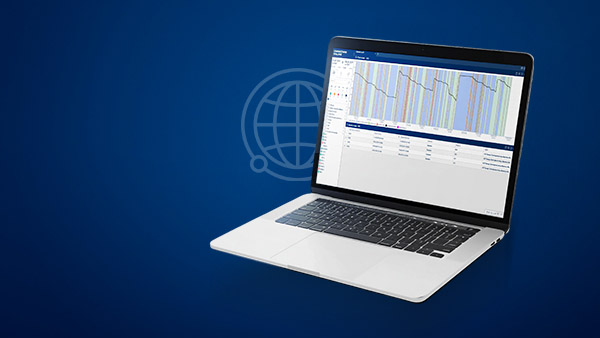
Omnicomm Online compares actual consumption with the norms set for each vehicle type, while the Group Work report highlights units that burn more fuel than similar vehicles. Managers use this data to reduce idling, stop fuel theft, coach drivers and adjust norms. Fleets typically reduce fuel costs by 25–35% within the first months, and most deployments pay back in 3 to 6 months.
Fuel consumption data can be exported to ERP, accounting and fuel card systems via API. Omnicomm sensors work with Omnicomm GPS trackers as well as third-party trackers that support the LLS protocol, so a fuel control system can be added to an existing telematics setup.
Fleets typically reduce fuel costs by 25-35% within the first months, and up to 50% in some industries. Documented results include 45% fuel economy at Fides Mining (Brazil), 32% savings at SBI International (Tanzania), 24% at ARSS Infrastructure in India (equal to $130,000 in monthly savings), and 12% in the first month at NQC Mexico (a $10,000 monthly saving with payback in under 3 months).
Savings stack on top of each other and the mix depends on how the fleet currently leaks fuel. Theft and fraud prevention is the largest one-time gain in month one after install: Belgrade Municipal's 500-vehicle fleet cut fuel consumption 15 to 40 percent within two months, with theft prevention as the dominant driver in the first weeks. Idle-time reduction comes next, as the platform surfaces vehicles burning fuel while parked and managers retrain the drivers responsible. Route and consumption optimization adds another layer by comparing each driver's L per 100 km against fleet norms and flagging the outliers. Maintenance-driven savings round out the picture, since catching engine inefficiencies early prevents fuel-burn drift. To estimate your own savings, take your current monthly fuel spend, run a conservative 15 percent reduction (idle and consumption alone) and a realistic 30 percent (theft prevention included), and compare against the system cost over 12 months. Most fleets break even well before year-end.
Most OMNICOMM deployments pay back in 3 to 6 months. NQC Mexico saw 12% fuel cost reduction in the first month and full ROI in under 3 months. ARSS Infrastructure in India recovered the deployment cost across a 2,500-vehicle fleet on the strength of $130,000 in monthly savings. Payback depends on fleet size, fuel price, and how much theft and idle waste was hidden before deployment.
Payback period is essentially total project cost divided by monthly savings. Project cost includes the sensors (lifetime warranty), the GPS tracker or terminal (often supplied by a partner or already in the fleet), installation labor (up to 70% faster because CalibrateX eliminates the manual tank-calibration step), software subscription per object, training, and any integration work. Monthly savings depend on the fleet's starting point. Operations with significant undetected theft will see payback in 60 to 90 days because the savings curve drops sharply in month one. Well-run fleets with mostly an idle and consumption problem will see payback in 4 to 6 months as the savings build gradually. To get an apples-to-apples number for your fleet, the OMNICOMM regional team can run a free ROI calculation using your monthly fuel spend, fleet size, and operating profile. Diesel price volatility also matters: when fuel prices rise, theft attempts increase by about 15% for every 10% jump in crude, and ROI accelerates correspondingly.
CAN bus data is generally not accurate enough for fleet fuel monitoring. The vehicle's CAN bus reports the factory dashboard gauge, which is typically a float-type sensor with up to 20% error and an upper dead zone that hides refueling events. CAN data can show approximate fuel level for the driver but cannot reliably detect refuelings, drains, or consumption anomalies, which are the events that drive ROI for a fleet.
Many fleet operators consider CAN bus as a no-extra-hardware option because GPS trackers can read it directly, so the appeal is clear. The trade-off is data quality. The factory fuel gauge inside almost every commercial vehicle uses a float-type sensor connected to the dashboard via the CAN bus. Float sensors have moving parts, blind spots at the top and bottom of the tank, and inherent measurement noise. The signal that reaches the CAN bus is filtered and smoothed by the vehicle's ECU specifically for human-readable display, not for analytics. Real refueling events of 20 to 50 liters often don't register cleanly because the upper dead zone hides them, and gradual drains are invisible. For fleets serious about detecting theft, idle waste, and consumption patterns, an aftermarket capacitive sensor such as OMNICOMM LLS is required. The capacitive sensor sees actual fuel level with sub-0.5% error and reports clean event data that CAN bus cannot produce.
A diesel fuel tracking system measures the volume of diesel in a tank in real time, records every fill and drain event with a timestamp and location, and compares actual consumption against expected consumption for the vehicle or equipment. Precision capacitive sensors such as OMNICOMM LLS sit inside the tank with no moving parts, achieve less than 0.5% error, and work with any diesel composition including biodiesel blends.
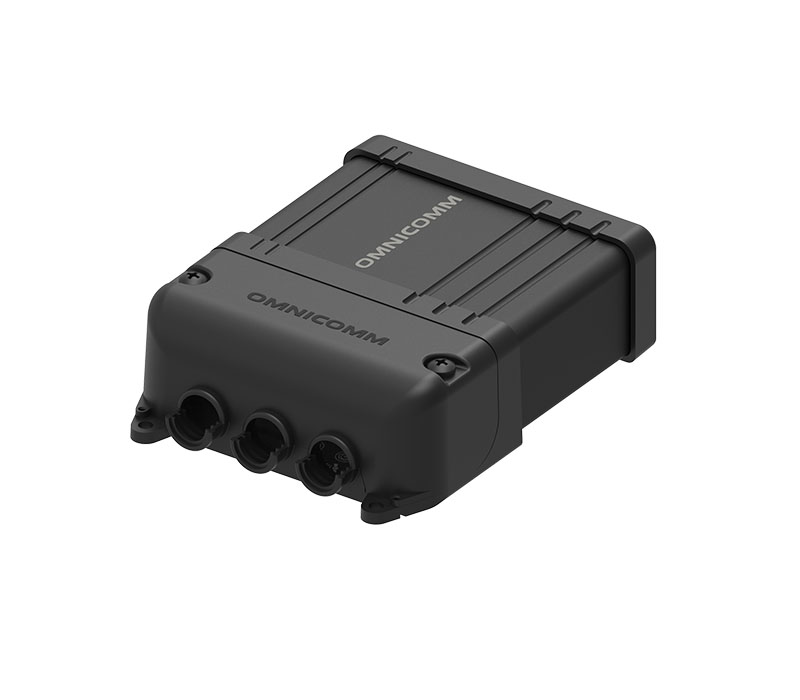
A capacitive sensor is fitted through a flange in the top of the diesel tank, calibrated to the tank's shape so sensor readings map to actual liters, and wired into a GPS tracker that pairs the fuel data with location and time. The tracker uploads to Omnicomm Online over cellular, or buffers locally and uploads over Wi-Fi for off-grid operations. The software detects every refuel, every drain, and every consumption pattern that deviates from the norm. Diesel is the dominant fuel for commercial fleets because the energy density is high and the engines are durable, but diesel composition varies between refineries and across biodiesel mandates. FuelScan auto-adaptation handles those variations without manual recalibration, which is the main reason fleets that started with float-type diesel sensors switch to capacitive systems as their operations grow. The accuracy gap also means that across an industry losing over $1.2 billion a year to fuel theft, most of the leak is invisible to operators relying on factory diesel gauges.
OMNICOMM LLS sensors deliver below 0.5% measurement error in real-world conditions, regardless of fuel type or composition, because FuelScan auto-adapts the sensor on the fly. On a 650-liter truck tank that means roughly plus or minus 3 liters, well within the 2 liters lost in the gas-station nozzle itself. By comparison, the factory dashboard gauge typically misses refueling events by up to 20 percent because it has an upper dead zone where the gauge stops moving even though more fuel is going in.
Accuracy in fuel monitoring is meaningless without two qualifiers: the conditions and the fuel. Most sensor brands quote a single accuracy figure from a lab test using one specific fuel type and composition at room temperature, and that figure only holds for that exact fuel. In the real world, composition changes every time the vehicle refuels at a different station, temperature swings from minus 40 to plus 60 Celsius depending on climate, and vibration is constant. OMNICOMM publishes its accuracy as below 0.5% across the full operating range (minus 40 to plus 85 Celsius, any biodiesel blend below epsilon 5, any tank shape calibrated correctly) regardless of fuel type or composition, because FuelScan continuously detects composition changes and recalibrates the sensor reading. The practical implication for fleets is that you can trust the data enough to investigate every flagged drain event without burning analyst time on false alarms. Even within the OMNICOMM lineup, LLS 4 reports 99.2% accuracy, LLS 5 reaches 99.5%, and the LLS 6 AI flagship exceeds 99.5% with neural network smoothing applied to raw readings.
We use cookies for analytics and advertising. They are set only with your consent. Privacy policy